Genius Scan - PDF Scanner
- 4.9
- Rating
- 10.00M
- Installs
- Free
- Price

 Analysis by App-foxy
Paperwork has a habit of appearing at the least convenient moment. A form needs signing, a receipt has to be sent, or a page from a contract must be kept before it disappears into a drawer. I have used Genius Scan for exactly those interruptions, and its main value is not that it turns a phone into a camera. It removes the small chain of chores between finding a document and having a usable digital copy.
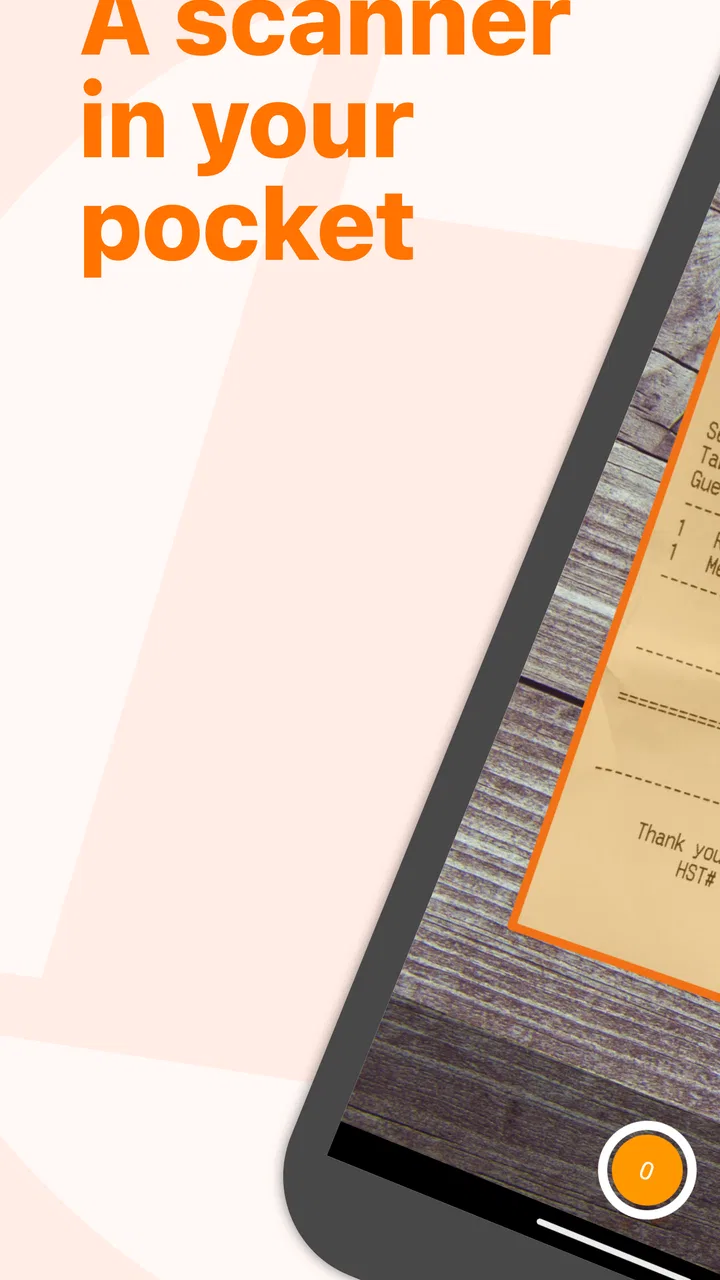
That makes it a practical business app rather than something I open for entertainment. The basic idea is simple: point the phone at a page, let the app recognize its edges, adjust the result, and keep the scan ready to share or store. In my experience, the difference from taking an ordinary photograph is most noticeable when the original page is angled, poorly lit, or surrounded by a distracting desk.
The app is free to install and carries an Everyone age rating, so it is approachable for personal paperwork as well as office use. The Grizzly Labs has kept it focused on document scanning instead of turning it into a broad office suite. That focus is a strength when I need a quick result, although people looking for a complete document-management system may eventually want another tool alongside it.
You May Also Like

 Blood Strike: 2.5 Anniversary
Blood Strike’s Loadouts Turn Every Drop Into a Tactical Gamble
A close look at Blood Strike’s custom loadouts: how fast access to signature weapons reshapes its battle royale rhythm, rewards preparation, and narrows the gap between fights.

 Pandora - Music & Podcasts
Pandora’s Music Is Easy to Start, but Harder to Recover
Pandora’s strength is its low-effort path from a seed to a station. Its weak spot is how much confidence it asks you to place in connection, setup, and quiet recovery.

 8 Ball Pool
 Is Built on Rivalries, Rematches, and Routine
A close look at the rivalries, rematches, shared routines, and unanswered safety questions that turn a quick pool match into a persistent mobile community.

 Samsung Music
’s Quiet Strength Is Playing What You Already Own
Its reach comes less from spectacle than from dependable access to a personal library. That simplicity is both the app’s strongest retention engine and its ceiling.

 AccuWeather: Weather Radar
AccuWeather Review: A Quick, Clear Forecast for Everyday Decisions
For everyday plans, the best forecast is the one you can understand quickly. AccuWeather makes rain timing, radar, and local conditions easy to act on, with a few trade-offs.

 Hill Climb Racing
Why Hill Climb Racing Still Turns Crashes Into One More Run
A tiny car, a bumpy hill and one more upgrade: Hill Climb Racing keeps resurfacing because its simple chaos makes every near-miss feel personal.
More From Our News Desk



How Genius Scan fits into real paperwork
When paper lands in my hands, I want to know not only whether I can scan it quickly, but also what choices I have before the image leaves my phone. I look at Genius Scan as a focused capture tool, so I pay attention to the moments when I review, save, and share a document. That practical lens also helps clarify which trust questions a scanner can answer through its visible controls.
The first setup is quick, but the useful habits come later
I do not think this is an app that needs a long onboarding session. The first useful setup is simply making sure the camera can see a page clearly and deciding where finished documents should go afterward. The important habit is to treat each scan as a small document project rather than a random photograph. I usually place all pages from one form or receipt together, check their order, and only then export or share the result.
That approach matters because a scanner app is judged by what happens after capture. A page that looks fine in the camera preview is not necessarily a good record if a corner is missing, text is hard to read, or several pages end up separated. Genius Scan gives me a more deliberate workflow: capture, inspect, adjust if needed, and save the complete document. That extra inspection takes a few seconds and prevents the more annoying job of rescanning later.
The edge detection is especially useful when I am working quickly. It helps separate the sheet from the surface beneath it, so the final page feels like a scan rather than a casual snapshot. I still check the boundaries instead of trusting automation blindly. A pale page on a pale table, a curled corner, or a shadow crossing the edge can make any automatic crop less reliable.
Its current version is 7.35.1, and the app supports devices running Android 8.0 or later. That makes it suitable for many older phones that are still perfectly capable of producing readable documents. I would still pay attention to the phone itself: a worn camera lens, weak lighting, or an unstable hand can affect the result more than the scanner interface does.
A realistic everyday workflow
Imagine receiving a paper invoice during a meeting and needing to send it to a colleague before the day ends. I would open the scanner, place the invoice on a contrasting surface, capture it, and review the crop before adding another page. If the invoice has a second side or an attachment, I would keep those pages in the same scan instead of creating several unrelated images. Once the document looks complete, I can send it through the sharing option I normally use.
This is where the app saves time. I do not have to find a physical scanner, wait for a computer to wake up, or photograph each page separately and later explain which image belongs to which document. The phone is already with me, and the process is short enough for a hallway, a café, or a home office. For occasional paperwork, that convenience is more important than having a large collection of advanced office tools.
I also find it useful for temporary records. A delivery note, signed authorization, repair estimate, or school form can be captured immediately while the paper is still in front of me. That does not mean I throw away the original automatically; for important documents, I keep the paper until I know the digital copy is complete and safely stored. The scanner reduces the risk of losing information, but it does not replace sensible document handling.
Where it removes friction
The biggest improvement over the normal camera app is consistency. A regular photo often includes too much background, produces a skewed rectangle, and makes a multi-page document awkward to organize. Genius Scan is built around the page, so I spend less time correcting the image afterward. That is a small benefit for one receipt and a substantial one when several pages need to be sent together.
I also prefer scanning a document in one session instead of making separate camera images. Keeping pages together makes the result easier to understand when I return to it later. This is one of the less obvious strengths of a dedicated scanner: it encourages me to think in terms of a finished document, not a pile of pictures.
Another useful habit is checking readability at the moment of capture. I zoom in mentally on small print, signatures, totals, and reference numbers before moving on. A scan can look attractive while still losing the detail that matters. If the page is important, I take the time to improve the lighting or reposition the phone rather than hoping the recipient will accept an unclear copy.
For business users, this makes the app a good companion to email, cloud storage, messaging, and accounting workflows, even though it is not a replacement for those services. I can create the scan here and then use the sharing destination that fits the situation. That separation keeps the scanner uncomplicated, but it also means the final organization depends on my own filing habits.
Tips that make the results more dependable
My first tip is to use a surface that contrasts with the paper. Automatic edge recognition has an easier job when the page does not blend into the background. I also avoid placing the phone directly over a shiny page under a strong lamp, because reflections can hide text even when the crop is perfect.
My second tip is to capture all pages before naming or sending anything. For a form with several sections, I check the sequence while the original pages are still spread out. This is faster than discovering later that the final page was omitted or inserted in the wrong place.
My third tip is to make a separate scan when a page has an unusual shape or important fine print. A quick capture may be enough for a simple receipt, but a contract, identification copy, or technical drawing deserves a slower check. The app can streamline the process, but it cannot recover details that were never captured clearly.
A fourth practical point is to think about the destination before choosing the final format or sharing route. A document going to a colleague may only need a quick send, while one being archived should have a clear name and a sensible location. Genius Scan handles the scanning part; I still need to make the document findable months later.
Who will get the most from it
I would recommend it to freelancers, students, small-business owners, field workers, renters, and anyone who regularly receives paper but does not have a scanner nearby. It is also useful for households that need to keep digital copies of warranties, receipts, school paperwork, or signed forms without building a complicated filing system.
The app is particularly appealing when speed matters more than deep document editing. If my goal is to turn a page into a clean, shareable scan, a dedicated scanner feels more direct than opening a full office suite. The free entry point makes it easy to try for occasional needs, while optional in-app purchases range from $0.99 to $39.99 per item for people who need more than the basic experience.
I would be more cautious about recommending it as the only tool for a large organization. Teams that require strict shared folders, approval trails, searchable archives, or detailed collaboration controls may need a broader business platform. In that situation, Genius Scan can still be useful at the capture stage, but it will not by itself solve every document-management requirement.
How it compares with the usual alternatives
The ordinary camera app is the obvious alternative, and it wins when I only need a visual reminder or a quick picture of a page. For a document that must look tidy and be read by someone else, the dedicated scanning workflow is better. It reduces background clutter and makes multiple pages feel like one item instead of a sequence of unrelated photographs.
A physical scanner can still produce excellent results, especially for a large batch of pages or a workplace that already has one connected to a computer. Its weakness is availability. I cannot carry it to a client visit or use it while standing beside a mailbox. Genius Scan trades some of that stationary convenience for immediate access from a phone.
Full office and cloud-storage apps may offer scanning as one feature among many. They can be preferable if all my documents already live inside one tightly connected work system. I choose Genius Scan when I want the capture step to stay focused and quick, then decide where the finished file belongs. That flexibility is helpful, but it also creates one extra decision after scanning.
Small limitations that affect the decision
The app does not eliminate the need for good capture conditions. A dark room, glare, motion, or a page with faint printing can still produce a disappointing result. I have found that taking a moment to adjust the page and light is more reliable than trying to rescue a poor scan afterward.
Automatic cropping is convenient, but it deserves supervision. Edges can be difficult when a page is folded, partly covered, or placed against a similar-colored background. I would not use any scanner app on autopilot for a document where a missing line or clipped signature could cause trouble.
There is also a difference between scanning and understanding. A clean image is not automatically searchable, editable, or organized according to a company’s filing rules. If I need intensive text extraction, advanced editing, or a carefully controlled archive, I would compare specialist tools before settling on this one. Its appeal is the straightforward capture workflow, not an attempt to replace every office application.
The rating gives a useful sense of how broadly the app has landed with users: it holds a 4.9 average from around 558 thousand ratings, with roughly 25 thousand written reviews. It has also passed 10 million installs. Those figures do not change my own workflow, but they match my impression that this is a mature, familiar choice rather than an experimental scanner.
My final view
The real benefit is time saved between paper and a usable digital document. Genius Scan makes that transition feel more intentional than the camera app and less cumbersome than finding a traditional scanner. I like it because it handles the part I repeatedly need—capturing clean, organized pages—without forcing me into a large office system.
I would choose it for receipts, forms, invoices, signed pages, and short multi-page documents, especially when I am away from a desk. I would look elsewhere if my priority were complex team administration, heavy editing, or a fully searchable long-term archive. For everyone in between, the free app is easy to try, the Everyone rating keeps it broadly accessible, and the focused design makes it a sensible pocket tool.
After using it, my advice is simple: scan while the paper is in front of you, check every important edge and line, keep related pages together, and file the result immediately. That routine is what turns Genius Scan from a convenient camera accessory into a dependable part of everyday paperwork.
FAQs for Genius Scan - PDF Scanner
01What is Genius Scan and how does it work?
Genius Scan is a mobile app that transforms your device into a portable scanner. It allows you to easily scan documents using your phone's camera, automatically detecting edges and enhancing the image quality for clarity. You can save scans as JPEG or PDF files and organize them within the app for easy access.
02Is Genius Scan secure for handling sensitive documents?
Yes, Genius Scan prioritizes security by offering several features to protect your documents. You can safeguard your scans with a password, use Touch ID or Face ID for quick access, and benefit from encrypted PDF creation. Additionally, the app does not store your documents on their servers, ensuring your data remains private.
03Does Genius Scan support cloud storage integration?
Absolutely! Genius Scan integrates seamlessly with various cloud storage services like Google Drive, Dropbox, Evernote, and OneDrive. This allows you to easily upload, store, and access your scans from any device, providing flexibility and ensuring your documents are backed up securely in the cloud.
04What formats can I save my scanned documents in Genius Scan?
Genius Scan allows you to save your scanned documents as either JPEG or PDF files. This versatility ensures you can choose the best format for your needs, whether you're sharing images or creating multipage PDF documents. The app also supports batch scanning to quickly compile multiple pages into a single document.
05Is Genius Scan available for both Android and iOS devices?
Yes, Genius Scan is available on both Android and iOS platforms, making it accessible to a wide range of users. The app is designed to offer a consistent experience across devices, ensuring that you can efficiently scan and manage your documents regardless of the operating system you are using.
Pros
- Quickly scans and digitizes documents.
- Automatic edge detection is accurate.
- Exports to multiple formats like PDF and JPEG.
- Integrates easily with cloud services.
- User-friendly interface simplifies navigation.
Cons
- Free version has limited features.
- Occasional issues with document alignment.
- Premium features require a subscription.
- OCR accuracy varies with lighting.
- Ads in the free version can be intrusive.

Genius Scan - PDF Scanner
Gallery